

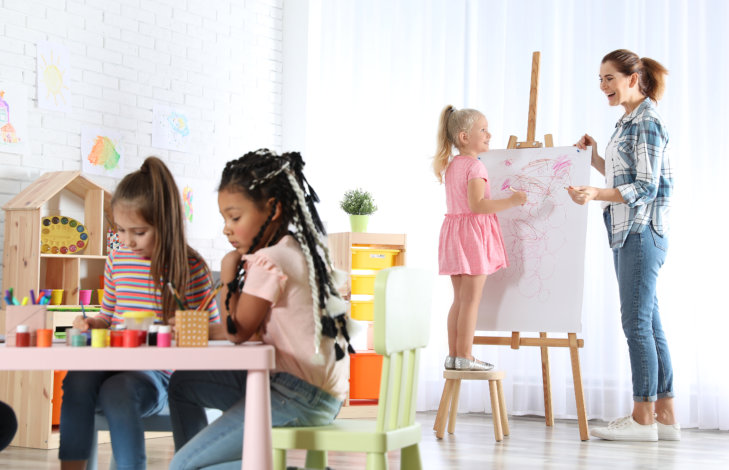
Kindergarten classrooms are full of small daily moments that help children feel sure of themselves. Confidence grows when children are given chances to try, speak, create, and interact in a safe space. Teachers guide these moments through simple routines that feel natural and enjoyable.
Activities in the classroom can shape how children see their own abilities. A kind word from a teacher, a chance to answer a question, or time spent working with friends can leave a lasting impression. These experiences help children feel comfortable sharing ideas and trying new tasks.
Learning spaces that focus on encouragement give children room to explore without pressure. Each activity becomes a step toward stronger self-belief. Parents often notice changes at home as children begin speaking up more and showing interest in new challenges.
- Circle Time Speaking Practice
Circle time gives children a chance to speak in front of others in a gentle setting. Teachers often begin with simple questions such as sharing a favorite color, talking about the weather, or describing a weekend moment. Each child gets a turn, which builds comfort with speaking aloud.
This setting helps reduce hesitation. Children hear their classmates speak and learn that everyone has something to say. Over time, voices grow steadier, and participation becomes more natural.
Songs, short stories, and group talks work well during this part of the day. Children begin to understand that their voice matters. Teachers guide responses with patience and encouragement, giving space for each child to finish thoughts without rush.
Small steps like these help children feel more relaxed in group settings. Speaking in front of peers becomes less stressful and more like a shared activity. - Creative Art Expression Moments
Drawing, painting, cutting shapes, and building crafts give room for personal expression. Each piece of art reflects choice and imagination.
Children often take pride in what they create. Displaying their work in the classroom adds a sense of value to their efforts. This recognition supports self-belief and encourages them to try new ideas during future projects.
Art stations also allow decision-making. Choosing colors, materials, and designs helps children trust their own preferences. Teachers may ask simple questions about their artwork, giving children a chance to explain their thinking.
These moments build comfort in making choices and sharing ideas. Over time, children feel more willing to try new materials and approaches without fear of mistakes. - Play-Based Problem Solving Games
Games that involve building blocks, puzzles, or group challenges help children think through simple problems. These activities often require teamwork, sharing, and patience.
When children work together on a puzzle or build a structure, they learn to listen to ideas from others. They also discover that different approaches can lead to the same result. This understanding supports confidence in group settings.
Teachers guide play without taking control. A small hint or question can help children continue working through challenges. Success during these activities brings a sense of achievement that encourages them to try more complex tasks later.
Friendly competition and shared goals can make learning feel natural. Children begin to trust their thinking skills and enjoy working through challenges with classmates. - Outdoor Exploration and Movement Activities
Outdoor play gives children space to move freely while learning through physical activity. Running games, simple obstacle courses, and group movement tasks help children feel active and engaged.
Movement activities support comfort in using the body in different ways. Children learn coordination, balance, and timing while having fun with peers. Group games like passing a ball or following simple instructions build cooperation.
Fresh air and open space often create a relaxed mood. Children who may feel shy indoors often become more open during outdoor activities. This shift supports participation and social interaction.
Teachers observe and guide gently, allowing children to explore movement at their own pace. Each small success adds to growing self-assurance. - Calm Reflection and Sharing Time
Quiet moments at the end of the day give children time to reflect on what they have done. Simple sharing circles or calm conversations allow them to talk about their experiences.
Children may describe something they enjoyed, a task they completed, or a moment with a friend. Speaking about personal experiences helps them recognize progress in their own learning journey.
This time also supports listening skills. Hearing classmates share stories builds respect and awareness of different experiences. Children begin to see value in both speaking and listening.
A calm environment helps children settle and feel secure. These moments close the day on a steady note and support readiness for future learning.
Confidence grows step by step through daily classroom experiences. Each activity shapes how children view their abilities, from speaking in groups to creative play. Haymarket Children’s Academy offers learning spaces where these moments are part of everyday routines.
Families who want to learn more or explore enrollment options can reach out to Haymarket Children’s Academy for details. A simple conversation can open the door to a supportive early learning experience.
Leave a Reply