

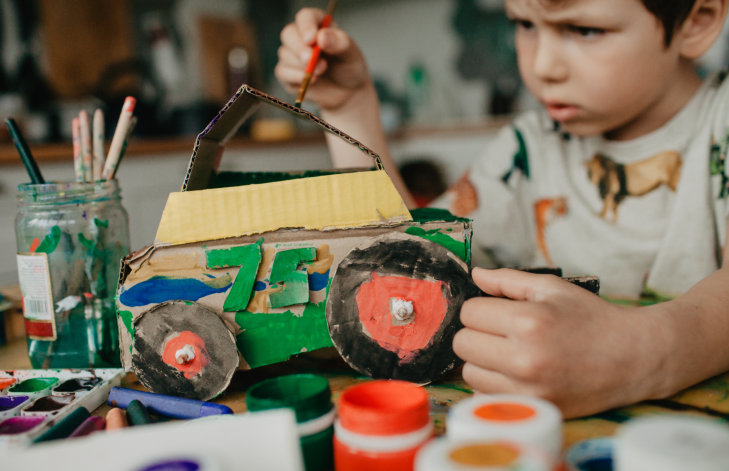
Early childhood is a time when children learn through exploration, relationships, movement, conversation, and play. Imaginative play gives children opportunities to create their own stories, take on different roles, and explore ideas through pretend situations. A child may turn a box into a house, use blocks to build a store, or pretend to care for a stuffed animal. These simple experiences can support meaningful learning across several areas of development. Play can be part of an engaging early childhood education experience that gives children room to express themselves, interact with others, and develop skills through enjoyable, purposeful activities.
- Supports Creative Thinking
Imaginative play gives children freedom to develop their own ideas. There may be no single correct way to build a pretend kitchen, create a classroom, or act out a story. Children can make choices, test ideas, change plans, and develop new possibilities through play.
This type of activity supports creativity by giving children opportunities to think beyond what is directly in front of them. A few blocks can become a bridge, a collection of toys can become a family, and a blanket can become part of a pretend campsite. Such experiences encourage flexible thinking and give children confidence in sharing original ideas.
Creative activities can be especially meaningful within a preschool program, where children are developing greater independence and learning how to communicate their thoughts. Teachers can provide materials and thoughtful prompts that encourage children to build on their own ideas without taking control of the activity. - Builds Communication Skills
Pretend play creates natural opportunities for children to talk. When children act out a restaurant, home, shop, or school, they may need to explain what is happening, assign roles, ask questions, or respond to another child’s ideas. These conversations can support vocabulary, listening, and expressive communication.
A child who pretends to be a doctor may describe what a patient needs. Another child may ask questions or suggest what should happen next. Through these exchanges, children practice using language for real social purposes.
Educators can join in play at appropriate moments, introduce new vocabulary, ask open-ended questions, and encourage children to explain their thinking. - Encourages Social Development
Imaginative play often involves cooperation. Children may need to decide who will play each role, agree on the story’s direction, share materials, and respond to changing ideas. These interactions provide valuable practice for social development.
Children may experience moments when their ideas differ from those of their peers. With supportive guidance, they can learn to listen, express preferences respectfully, wait for a turn, and find solutions that allow everyone to participate. These experiences can help children develop a stronger awareness of other people’s perspectives.
Within early learning programs, educators can create group activities that give children opportunities to work together through pretend scenarios. Small-group play can support friendships and help children become more comfortable participating in shared activities. - Develops Emotional Expression
Children may find it easier to explore feelings through pretend characters and stories. A child may create a story about a character who feels nervous about starting school or excited about meeting a new friend. Through this process, children can explore emotions in a setting that feels familiar and manageable.
Pretend play can give educators insight into the themes that interest children. A teacher may notice that a child repeatedly creates stories about family routines, friendship, animals, or new experiences. These observations can help educators respond with thoughtful questions and supportive conversations.
A nurturing preschool education setting can provide children with opportunities to express their feelings through stories, role-play, art, and other creative experiences. Such activities can support emotional awareness and help children develop language for describing their experiences. - Strengthens Problem-Solving Skills
Imaginative play often creates small challenges that children must solve. A pretend store may need a checkout area. A block structure may fall apart and require rebuilding. A group story may change direction because a child introduces a new character.
These moments encourage children to think about what they can do next. They can try different approaches, make adjustments, and learn from results. The process matters more than getting everything right on the first attempt.
A thoughtful approach to child development recognizes that children benefit from opportunities to make choices and work through age-appropriate challenges. Teachers can offer guidance when needed, then give children space to continue exploring their own solutions. - Supports Independence and Confidence
Children gain a sense of ownership when they can decide how a play experience develops. Choosing a role, selecting materials, creating a story, or deciding what happens next gives children opportunities to practice independence.
Confidence can grow when children see their ideas take shape. A child who creates a pretend bakery may organize the space, name the products, serve customers, and develop a story around the activity. Each decision gives the child a chance to practice initiative and responsibility.
Within a supportive learning environment, educators can provide age-appropriate materials that invite children to lead portions of their play. This approach gives children meaningful opportunities to make choices and share their ideas. - Makes Learning Meaningful
Imaginative play can connect learning with experiences children understand. Counting pretend food can introduce early math concepts. Creating signs for a pretend shop can support early writing. Acting out a story can strengthen listening and sequencing skills. Building a pretend home can introduce concepts related to space, structure, and organization.
These experiences can complement structured activities within childcare programs and early childhood programs. Children can practice skills through activities that connect naturally with their interests.
At Haymarket Children’s Academy, opportunities for creative play can be part of a caring approach to childcare education. Educators can encourage children to explore, communicate, create, and participate at a pace suited to their developmental stage. Families seeking a nurturing preschool learning experience can learn more about how play-based activities support children’s growth.
Imaginative play gives children opportunities to communicate ideas, explore emotions, solve problems, cooperate with peers, and make choices. These experiences can contribute to social, emotional, language, cognitive, and creative development during the early years.
Families can contact Haymarket Children’s Academy to learn more about its programs and discover how meaningful play experiences can support children’s early learning and development. A supportive setting can give children the time, materials, encouragement, and caring guidance they need to express their ideas and enjoy the learning process.
Disclaimer
Blogs, content and other media uploaded online are for informational purposes only. Contents on this website should not be considered medical advice. Readers are strongly encouraged to visit their physician for health-related issues.
Leave a Reply