

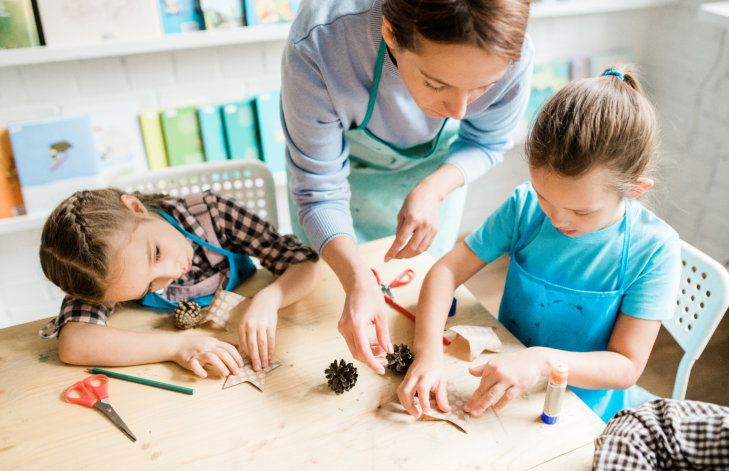
Children learn best when they can actively take part in an experience. Holding materials, testing ideas, building objects, asking questions, and making choices give young learners opportunities to connect new information with something they can see and feel. Hands-on learning activities make learning more meaningful because children can practice a skill rather than just hear about it. At Haymarket Children’s Academy, activities can turn everyday moments into opportunities for children to explore, practice, and develop new abilities.
- What Hands-On Learning Means
Hands-on learning gives children opportunities to use their senses and physical skills as they learn. A child may sort objects by color, mix ingredients, build a tower, plant a seed, paint a picture, or investigate what happens when water moves through different containers. Each activity gives children something to do and a reason to think.
These experiences fit naturally into a quality preschool program because young children often understand ideas more clearly through direct experiences. A simple activity can introduce early math, language, science, and problem-solving skills at the same time. Children can make predictions, test their ideas, observe results, and talk about what they discovered. This creates meaningful preschool learning activities that connect learning with everyday experiences. - Building Fine Motor Skills
Small movements help children develop control and coordination. Activities such as threading beads, using child-safe scissors, molding play-dough, drawing, stacking blocks, and transferring small objects allow children to practice movements that support everyday tasks.
These hands-on activities for preschoolers can strengthen the muscles in the hands and fingers and help children develop greater control over their movements. Pouring water, picking up small objects, turning pages, or using art materials can give children repeated practice in a natural setting. With regular opportunities to work with different materials, children can gradually become more comfortable using their hands with care and precision. - Supporting Thinking and Problem-Solving
Hands-on experiences give children opportunities to think about what they see and decide what to do next. A child building a block structure may notice that it falls when the base is too narrow. Instead of simply receiving an answer, the child can try a wider base and observe the result.
This type of learning through hands-on activities supports early reasoning and problem-solving. Children learn to make predictions, notice patterns, compare results, and make adjustments. These skills contribute to child development by helping children become active participants in their own learning.
Simple science activities can provide excellent examples. Teachers can ask children whether an object will sink or float, what might happen when ice is placed in warm water, or how plants change after receiving water and sunlight. Children can observe the results and explain their thoughts using their own words. - Encouraging Creativity and Exploration
Art, construction, and sensory experiences give children room to make choices and explore ideas. A child might use blocks to create a house, use clay to form an object, or combine different textures during a sensory activity. There does not need to be one correct result.
These experiences support early learning by giving children opportunities to experiment and express their ideas. Art activities can introduce colors, shapes, patterns, and textures. Construction activities can encourage children to think about balance, size, position, and structure. Sensory activities can help children explore how materials feel, move, smell, or respond to touch.
Cooking activities can provide another practical learning experience. Measuring ingredients introduces numbers and simple quantities. Mixing, pouring, and observing changes in ingredients can encourage children to ask questions and follow steps. Teachers can turn these ordinary tasks into meaningful learning moments. - Developing Communication and Cooperation
Hands-on activities can create natural opportunities for children to communicate with teachers and peers. Building with blocks may require children to share materials and discuss what they want to create. Group art projects can encourage children to exchange ideas, take turns, and listen to one another.
These interactions support social skills alongside academic learning. Children can practice using words to describe what they are doing, ask questions, express preferences, and respond to other children’s ideas. Activities completed in small groups can give children repeated opportunities to practice cooperation in a supportive setting.
Outdoor exploration can provide similar experiences. Children can collect leaves, observe insects, compare natural objects, look for different shapes, or notice changes in the environment. Such activities connect children with nature and give them opportunities to use movement, observation, language, and problem-solving skills together. - How Teachers Turn Activities Into Learning
A hands-on activity becomes more meaningful when teachers guide children with thoughtful questions and encouragement. Rather than completing a task for a child, a teacher can ask, “What do you think will happen?” or “What could we try next?” Questions like these invite children to explain their thinking and explore possible solutions.
Teachers can adjust activities based on children’s interests and developmental needs. A building activity may introduce counting for one group and simple engineering concepts for another. A cooking activity may focus on following directions, measuring, or vocabulary. This flexibility helps childcare services provide learning experiences that feel purposeful and engaging. - Hands-On Learning at Home
Families can support the same approach through simple activities at home. Children can help sort laundry by color, measure ingredients during cooking, build structures from boxes, plant seeds, draw pictures about a story, or collect natural objects during outdoor walks.
These activities do not require expensive materials. Everyday objects can become useful learning tools when children are encouraged to touch, test, compare, create, and explain. Families can make these experiences part of a child’s routine, creating more opportunities for active learning outside the classroom.
At Haymarket Children’s Academy, hands-on experiences can be part of a nurturing childcare center environment where children have opportunities to learn through active participation. Our team can help children build skills through purposeful activities that support curiosity, creativity, communication, and growing independence. Contact us to learn more about our approach to early learning and the experiences available for children and families.

Leave a Reply