

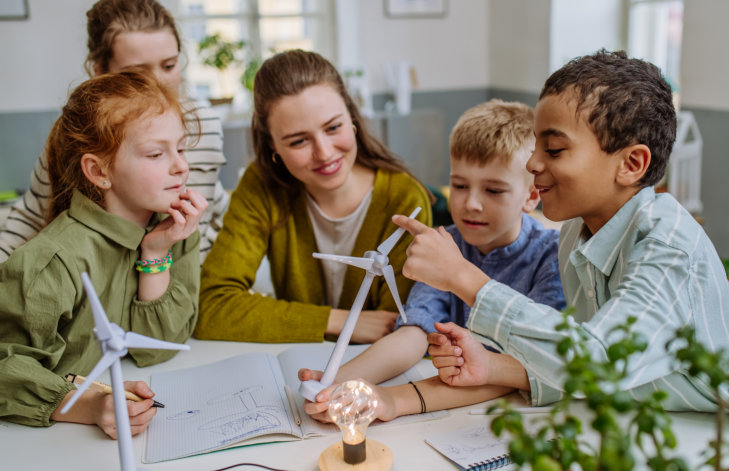
Young children meet small problems throughout the day. A block tower falls, a puzzle piece does not fit, or two children want the same toy. These moments give children chances to think, make choices, test ideas, and learn from results. Problem-solving skills for children begin with simple experiences like these. At Haymarket Children’s Academy, we give young learners opportunities to think for themselves in a caring, supportive setting. Teachers can guide children with thoughtful questions and encouragement, helping them build confidence in their ideas.
- What Problem-Solving Means for Young Children
For a young child, problem-solving may mean finding the right puzzle piece or trying another way to reach a goal. Children observe, choose, test a solution, and check what happens next.
Problem-solving supports cognitive development because children use memory, attention, reasoning, and flexible thinking during these moments. This supports independent learning and gives children practice with decision-making. - Why Problem-Solving Matters in Early Childhood
Young children gain more than a solution from these experiences. They learn that challenges can be approached step by step.
These experiences support young children’s critical thinking by encouraging them to compare choices, notice patterns, and predict what might happen next. Problem-solving can support communication, too. Children may explain an idea, listen to another child’s suggestion, or ask for help. These skills contribute to child development and group participation. - Give Children Choices
Simple choices give children practice with independent thinking. Teachers and families can ask, “Which piece do you think fits here?” or “What could we try next?” A child might choose materials for an art project or decide how to arrange blocks for a pretend store.
Adults can set clear limits and then let children make decisions within those limits. This gives children a sense of ownership over learning. - Use Puzzles and Building Activities
Puzzles, blocks, sorting games, and construction materials offer natural problem-solving activities for preschoolers. A child working on a puzzle looks at shapes, colors, and pictures before choosing a piece. A child building with blocks thinks about balance, size, and placement.
These early learning activities can be matched to a child’s age and ability. If a structure falls, the child can rebuild it, change the base, use fewer blocks, or try another arrangement. Each attempt provides information for the next choice. - Ask Questions Instead of Giving Answers
Adults often know how to solve a child’s problem quickly. Asking a thoughtful question gives the child a chance to think. Questions such as “What do you notice?” “What have you tried?” and “What might happen if you move this?” can guide children toward their own solutions.
Teachers can offer hints when a child needs support, then step back and allow the child to continue. This is a valuable part of play-based learning because children learn through active participation. The child takes the lead. - Encourage Children to Try Again
A solution that does not work can become a useful learning experience. Children may feel frustrated when a tower falls or a puzzle piece will not fit. Calm encouragement can help them pause and try a new approach.
Adults can say, “That did not work yet. What could we change?” This language shifts attention from failure to learning. Children begin to understand that mistakes provide information. Repeated practice can build patience, confidence, and persistence. - Use Everyday Moments for Practice
Problem-solving does not require special materials. At home or in a classroom, children can help organize toys, figure out how many cups are needed for snack time, choose how to carry several items, or find a missing game piece.
Pretend play creates more opportunities. Children might run a pretend restaurant, build a home for stuffed animals, or create rules for a simple game. They may need to decide what to do when a toy gets “lost” or two characters want the same item. These situations encourage children to plan, communicate, make choices, and adjust their ideas. - How Teachers Can Guide Independent Thinking
Teachers help create a classroom where children feel comfortable trying new solutions. We can provide materials, questions, and age-appropriate challenges that encourage children to think through problems. Teachers can observe how a child approaches a task, offer support when needed, and give enough time for another attempt.
This guidance can build confidence because children experience the satisfaction of solving something through their own effort. A child learns that their thinking can make a difference. - Simple Ways Families Can Practice at Home
Families can build problem-solving into ordinary play. Try asking children to build a bridge with blocks, sort objects by size, create a path for toy cars, or find several ways to use one item during pretend play. Allow time for experimentation.
Adults can praise effort and thoughtful choices rather than focusing only on the correct answer. Phrases such as “You found another way to try it” or “You changed your plan and tried again” show children that effort and persistence have value. - Building Confident Problem Solvers
Young children become stronger problem solvers through repeated opportunities to make choices, test ideas, learn from mistakes, and try again. Puzzles, building tasks, pretend play, classroom routines, and family activities can all support this growth.
We believe children deserve space to think, explore, and develop confidence in their abilities. Our early learning programs give children meaningful opportunities to practice independent thinking in a supportive setting. Contact Haymarket Children’s Academy to learn more about how we can support your child’s cognitive development, curiosity, and growing problem-solving skills.
Leave a Reply