

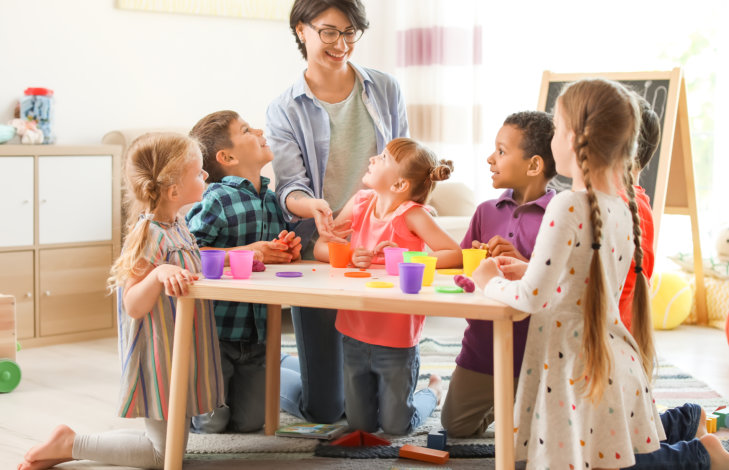
Play-based preschool learning gives children space to explore ideas, try out actions, and interact with others in ways that feel natural and enjoyable. This approach centers learning through activities such as pretend play, building blocks, group games, storytelling, and simple hands-on tasks. These moments may look simple on the surface, yet they carry strong value in shaping communication, thinking, and social behavior. Adults often notice that children gain confidence, learn cooperation, and begin to express ideas more clearly through these daily experiences. Over time, these small interactions support a solid base for later learning stages and everyday life situations.
- Communication and Social Skills Through Interaction
Play settings give children chances to speak, listen, and respond in group situations. During role-play activities or shared games, they learn how to express thoughts in ways others can understand. Conversations during play often involve turn-taking, asking questions, and responding with ideas. These habits support stronger communication patterns that carry into future group settings such as classrooms and community activities.
Social learning grows as children interact with peers who may think differently or want different outcomes in a game. They begin to practice patience, sharing, and cooperation without formal instruction. Simple disagreements during play become learning moments for understanding other viewpoints. Over time, these interactions help shape respectful behavior and clearer expression when working with others in different environments. - Thinking Skills and Problem Solving
Play activities often present small challenges that encourage thinking and decision-making. Building structures with blocks, completing puzzles, or creating pretend scenarios requires planning and adjustment. Children test ideas, see outcomes, and try again with changes. This process builds flexible thinking that supports learning in many areas beyond play itself.
Open-ended play gives room for curiosity. There is no single correct path, so children explore different ways to reach a result. They begin to notice patterns, compare results, and make simple connections between actions and outcomes. These experiences support early reasoning skills that later connect with reading, math, and other academic areas.
At our academy, guided play activities often encourage children to explore questions such as “what happens if” or “how can this work differently.” This type of thinking builds confidence in trying new approaches without hesitation. - Emotional Growth and Confidence Building
Play also gives children a safe space to express feelings. Through imaginative roles and group interaction, they act out situations that reflect real-life emotions. This helps them recognize feelings such as happiness, frustration, excitement, or disappointment in themselves and others. Over time, they begin to manage reactions in calmer ways.
Confidence grows when children complete tasks on their own or contribute ideas during group play. Even small achievements can create a sense of satisfaction, such as finishing a drawing or building a tower. Positive experiences like these support a willingness to try new tasks without fear of failure.
Support from educators during play adds another layer of comfort. Gentle guidance and encouragement help children feel secure while exploring new activities. This balance of independence and support allows emotional stability to grow naturally through daily routines. - Physical Development Through Active Play
Movement-based play supports coordination and control of the body. Running, jumping, stacking objects, and drawing all involve different motor skills. These actions help children strengthen hand-eye coordination and balance. Fine motor skills develop through activities like cutting paper, stringing beads, or shaping clay.
Group movement games also encourage awareness of space and timing. Children learn how to move around others safely while keeping track of objects and actions. These physical experiences support readiness for writing, drawing, and other school-related tasks that require control and precision.
Regular physical play also supports energy release in a healthy way. It creates balance between active moments and calm activities such as reading or storytelling. - Readiness for Later Learning
Play-based experiences prepare children for structured learning by building focus, patience, and curiosity. Group activities encourage listening skills, while creative tasks support attention to detail. Children begin to follow simple instructions and complete tasks from start to finish.
Interest in learning grows when activities feel enjoyable and meaningful. Instead of seeing learning as pressure, children begin to view it as part of daily exploration. This mindset supports steady progress in later educational settings.
Play is integrated into daily learning routines so children can build these habits in a steady and supportive setting. Each activity offers a chance to strengthen skills that will be used across many stages of learning and life experiences.
We invite you to connect with us to learn more about how play-based learning supports meaningful growth in young learners. A visit or simple conversation can offer a clearer sense of how children engage in daily activities that build communication, thinking skills, emotional awareness, and physical coordination in a steady, supportive setting at Haymarket Children’s Academy.
If you are exploring a preschool experience that values learning through active participation and meaningful interaction, we welcome your questions and interest. You can reach out to our team to schedule a visit or speak with us directly about our approach. We are here to share how children are encouraged to grow through purposeful play and guided experiences that support their early learning journey.

Leave a Reply